
How to value your trading cards
Written by James Fuller-Thompson, founder of CardBuyer
Whether you’re clearing out a binder of childhood Pokémon, selling a few hits from a box break or moving on a PC you’ve built over years, there’s one question every buyer will ask: “Have you got a price in mind?”
When selling on CardBuyer you are required to set an asking price, and getting it right is one of the most important steps in selling. The card market moves constantly: a rookie has a big weekend, a new set drops, a player gets injured, and prices follow. Price too low and you leave money on the table. Price too high and you put off serious buyers.
The good news: you don’t need to be an expert. A card is typically worth what the same card, in the same condition or grade, has recently sold for. This guide shows you how to find that number in four steps.
Step 1: Identify exactly what you have
Two cards of the same player or Pokémon can be worth £2 or £2,000, and the details decide which. Before you search for prices, note down:
- Year and set, e.g. 2023 Topps Chrome UEFA Club Competitions, Pokémon Scarlet & Violet 151
- Card number, usually on the back, or in the bottom corner on Pokémon cards
- Player or character
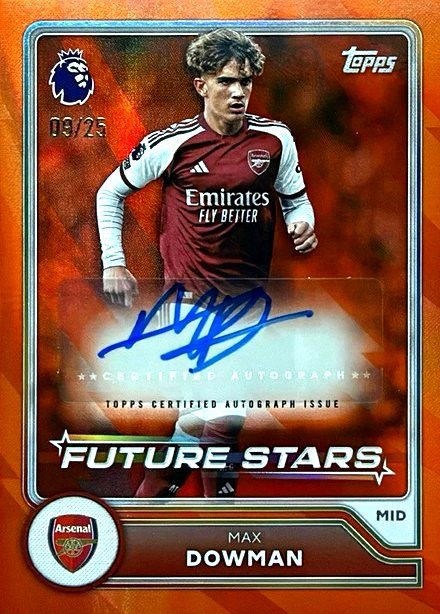
- Parallel or variant: refractor, prizm, colour border, reverse holo, full art, alt art
- Serial number: a stamped “/99” or “/10” means a limited print run, which usually adds value
- Rookie card, marked “RC” on most modern sports cards
- Autograph or memorabilia: on-card autos usually carry a premium over sticker autos
Raw or graded?
Graded cards have been authenticated and given a condition score by a grading company such as PSA, BGS (Beckett), CGC, SGC or Ace. They come sealed in a slab with the grade and a certificate number on the label. Raw cards are ungraded.
If your card is graded, the grade and the grading company are part of its identity. A PSA 10 can sell for several times the price of a PSA 9 of the same card, and a PSA 10 and a CGC 10 rarely sell for the same. Always note both.
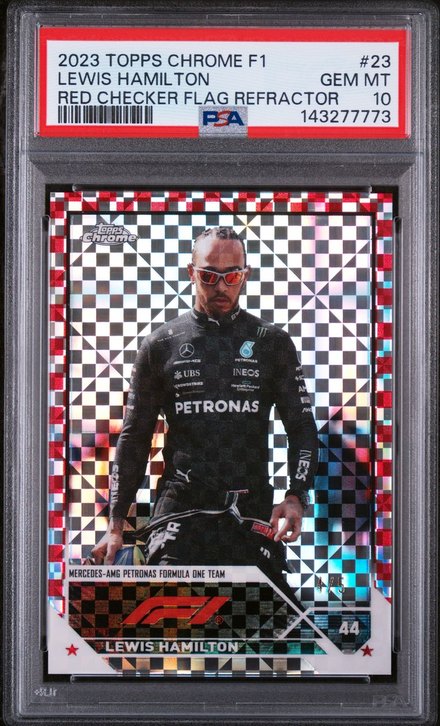 Graded: PSA 9
 Raw: ungraded
Step 2: Find recent sold prices
This is where your card’s value comes from. Aim for three to five sales of the exact same card (same set, number, parallel and grade) from the last 30–90 days. Older sales can be badly out of date in a market that moves fast.
eBay sold listings
The biggest pool of real sales, for every category. Search for your card on eBay.co.uk, then tick Sold items in the filters (in the app: Filter → Sold items). Prices in green sold; ignore anything still listed, because an asking price is just a hope. Use eBay.co.uk first for UK prices, then eBay.com if there aren’t enough UK sales.
One catch: when a listing sells via Best Offer, eBay shows the original asking price, not what the buyer actually paid.
130point
130point is a free tool that searches eBay sales and shows the accepted Best Offer price that eBay hides. Paste in the same search you used on eBay and compare. If a lot of sales went through Best Offer, it gives you a far more accurate picture.
CardLadder
CardLadder is the tool many serious collectors and dealers use. It pulls sales from eBay and the major auction houses into one price history per card, with charts showing how the price has moved over time. Search for your card, select the right grade, and check the recent sales and trend. Some features need a paid subscription, but it’s well worth it if you sell regularly.
Can’t find your exact card?
That’s common with low-numbered parallels and rarer cards. Work outwards from the closest match:
- Neighbouring parallels: a /50 sits between the /99 and the /25 of the same card
- The same parallel in a different grade: a PSA 9 sale tells you roughly where a PSA 10 or 8 sits
- Similar players or characters in the same set and parallel
- The same card from a different year's release
The less exact the match, the wider the range you should allow.
Step 3: Adjust for condition (raw cards)
For raw cards, compare against sales in similar condition. Check your card under good light, front and back:
- Corners: sharp, or soft and rounded?
- Edges: any whitening or chipping?
- Surface: scratches, print lines, dents or creases?
- Centring: are the borders even on all sides?
A crease or heavy whitening can cut a card’s value sharply. If yours has visible wear, price it nearer the lower end of the sales you found. Be honest in your photos: dealers will see the card when it arrives.
Step 4: Set your asking price
Take the middle of your recent sold prices as your card’s market value. Then decide how you want to sell.
Selling to a dealer, expect offers below that figure. How far below depends on the card (more on that below). Selling yourself on eBay, remember fees come off the top: often 15–20% once payment and postage costs are counted.
Ask well above recent sales and you’ll get fewer offers, or none.
Know your price? Get offers.
Trusted UK dealers make offers within 48 hours. Free, with no obligation.


How much do dealers pay?
There’s no fixed percentage. Dealers typically offer 70–90% of recent sale prices, and where your card lands in that range depends on:
- Liquidity: how often the card sells. A popular rookie or chase Pokémon that sells every day is easy to move on, so dealers will pay closer to recent sales. A card that sells once every few months ties up their money for longer, so offers will be lower.
- Value: higher-value cards often attract offers closer to recent sales, as the dealer’s margin is still worthwhile in pounds.
- Condition and grade: clean, well-graded cards are easier to resell.
- Market direction: if a player or set is cooling off, dealers price in the risk of it falling further.
Why don’t dealers pay the last sold price?
Dealers are businesses. They buy to sell on, usually at or near the market price, and the difference, minus their own selling fees and costs, is what they make for the service they provide.
And it is a service. The price a dealer offers is the amount you get:
- No eBay fees or payment fees coming off the top
- No photographing, listing, answering messages or haggling
- No risk of non-paying buyers, scams or chargebacks
- Offers within 48 hours, instead of waiting weeks for the right buyer on eBay, or months for the next card show
For many sellers, a fair cash offer now is worth more than a slightly higher price at some point later.
Common mistakes
- Using asking prices. Anyone can list a card for £1,000. Only sold prices show what buyers actually pay.
- Mixing up parallels. A base card and its numbered parallel look almost identical but can differ in value by 10 times or more.
- Comparing different grades or graders. A PSA 9 isn’t a PSA 10, and a PSA 10 isn’t a CGC 10.
- Relying on old sales. A price from last year may be well out of date.
- Overrating condition. Small marks you’ve stopped noticing will show up in a dealer’s inspection.
- Converting US dollar prices directly. UK sales are a better guide for UK buyers.
Get multiple offers, find the real market price
When you sell with CardBuyer, your card goes to trusted UK dealers who buy cards like yours. They make their offers within 48 hours, and you choose which, if any, to accept. Several dealers competing for the same card is the clearest way to know you’re getting the true market price for a quick sale.
FAQ
- How do I know if my cards are worth anything?
- Search the exact card on eBay UK and filter by sold items. Most base cards from recent sets sell for under £1. Rookies, numbered parallels, autographs, graded cards and popular Pokémon rares are where the value usually sits.
- How much is my Pokémon card worth?
- Check recent sold prices on eBay UK and Cardmarket for the same set, card number, language and condition or grade. Full art, alt art and vintage holos tend to be worth the most.
- Is it worth getting my card graded?
- Usually only if the card is valuable raw and in excellent condition. Grading costs money and takes weeks, and a lower grade than expected can reduce its value. Compare the sold prices for the raw card and for a PSA 9 and PSA 10 before deciding.
- Why do dealers offer less than eBay sold prices?
- Dealers buy to resell, so their offer has to cover selling fees, holding costs and the risk that prices fall. In return you get a quick, certain sale with no fees or hassle.
- Does CardBuyer value my cards?
- No. CardBuyer reads your card's details from your photos, and you set your asking price. Verified dealers then make their own offers.
- How quickly will I get an offer?
- Dealers have 48 hours to make their offers.
More help: all selling guides